Welcome to Trail Shoes Reviewed! Today we’re taking a closer look at the Hoka Challenger 8, a versatile trail shoe that builds on the popular Challenger 7 with some key updates—particularly to the midsole stack, outsole grip, and forefoot rocker.
If you’re a fan of lightweight, comfortable trail shoes that can handle a bit of everything—from road-to-trail transitions to fire roads and light trail running—then the Challenger 8 might just be on your radar. But does it improve on the last model? And how does it compare to the Clifton 10, its road-running sibling?
Let’s break it all down.
Midsole & Cushioning: More Stack, Firmer Feel
The biggest change in the Hoka Challenger 8 is the increase in stack height. You’re now getting 42mm in the heel and 34mm in the forefoot, bumping the drop up to 8mm (from 5mm in previous versions). This matches the shift we’ve also seen in the Clifton 10, which saw a similar stack and drop change this year.
But even with that added cushioning, the feel underfoot is quite different to the Clifton. While both use CMEVA foam, the Clifton 10 has a bouncier and softer ride. The Challenger 8 retains a firmer, more responsive feel that trail runners often prefer. You get a bit more protection underfoot than the Challenger 7, especially in the forefoot, which is great for longer efforts or harder surfaces.
That said, the added foam does make the forefoot slightly stiffer. To compensate, Hoka has introduced a more aggressive forefoot rocker, making the transition from midfoot to toe-off smoother and more efficient—particularly on flat or gently uphill trails.
Outsole: Better Grip for Moderate Trails
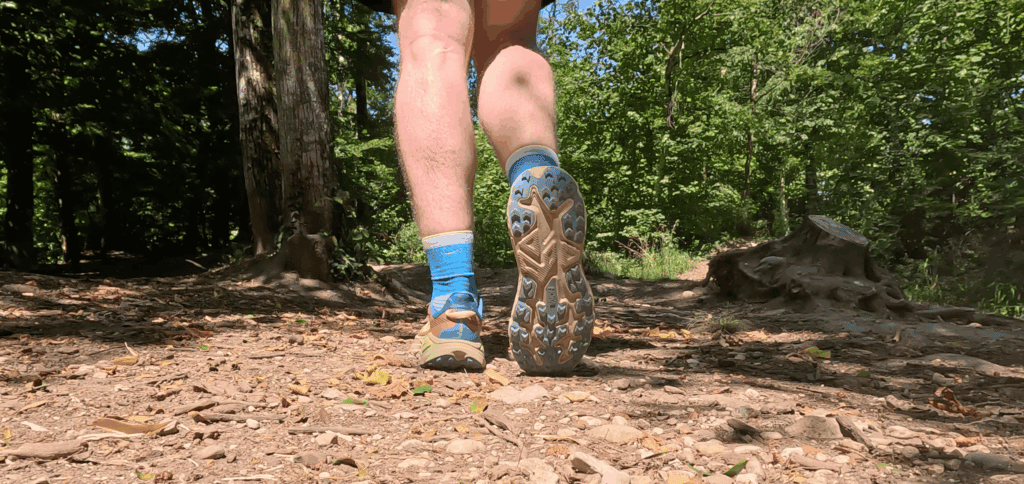
Flip the shoe over, and you’ll notice a redesigned outsole. Hoka has stuck with 4mm lugs, but they’re now more multidirectional, which helps with traction and stability—especially on uneven or moderate trails.
It’s not Vibram Megagrip like you’ll find on the Speedgoat 6, so if you’re tackling wet or technical terrain, it might fall short. But for dry conditions, gravel paths, and light mud, this version should perform better than the Challenger 7, thanks to the improved lug orientation and spacing.
We haven’t had enough rain to test it thoroughly in wet, muddy conditions just yet—but once we’ve logged about 40–50 miles, we’ll post an update with more real-world performance feedback.
Upper & Fit: Neutral, with Subtle Stability Features
Moving up the shoe, the upper still fits like a classic Hoka—but with a few enhancements.
You’ve got:
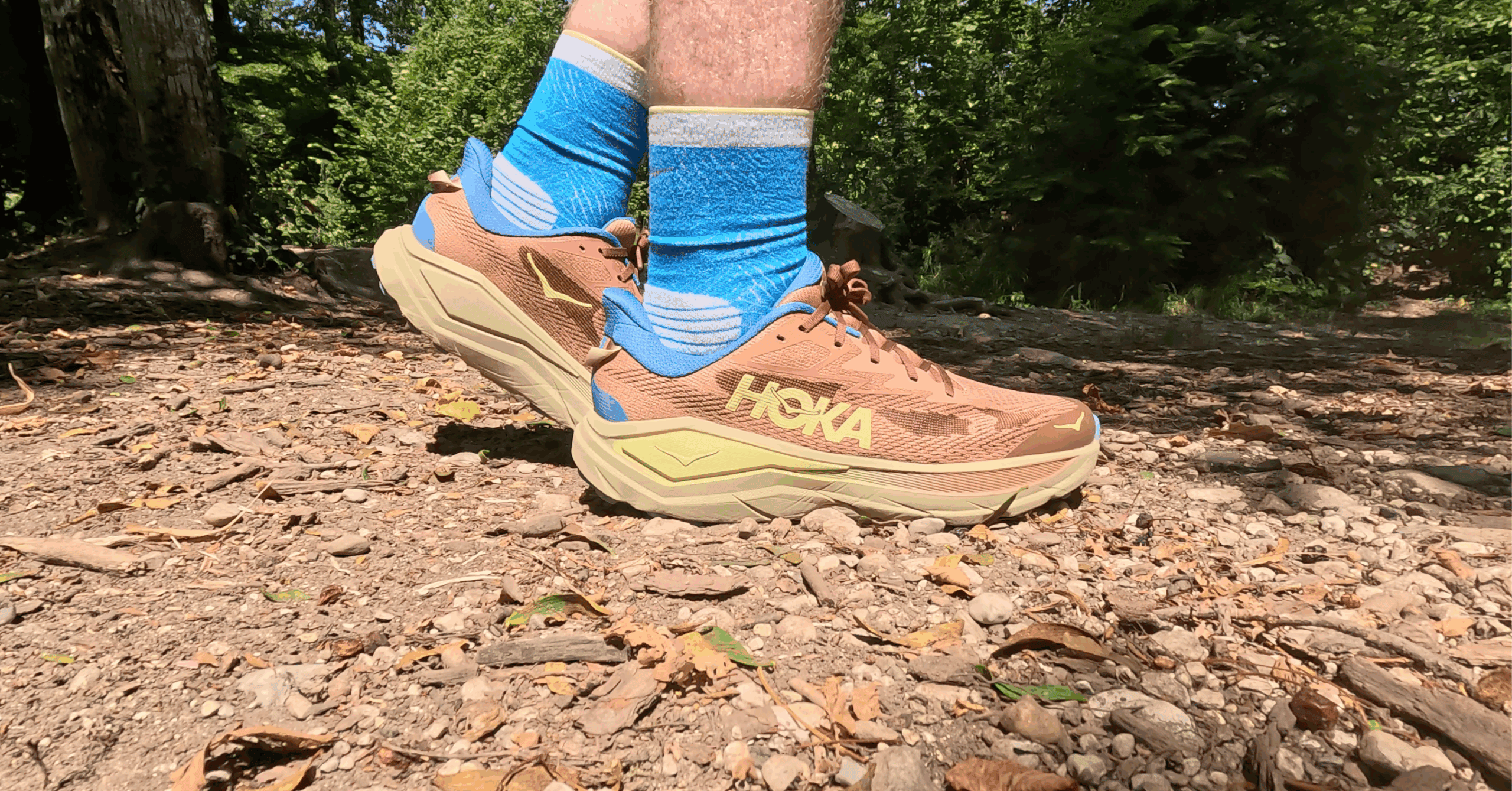
- Mild sidewalls on both sides for subtle guidance.
- A broad base and sole flare, which means the platform extends beyond your foot for added stability.
- A non-gusseted padded tongue and plenty of heel cushioning, giving you that plush Hoka feel.
The heel counter is fairly stiff, which helps with rearfoot stability and may assist runners who tend to overpronate during the initial ground contact phase. While it’s still technically a neutral shoe, these stability features make it feel a bit more supportive—ideal for long days on your feet.
As for fit:
- It’s true to size in length.
- There’s a touch more room in the toe box compared to the Challenger 7.
- A wide version is also available for those who need extra width.
Just note: if you’re used to lightweight trail shoes, the extra cushioning and padding may make this version feel a bit bulkier than previous iterations.
Weight: Heavier, but More Protective
With the added stack and new design features, the weight has gone up. The Challenger 8 now weighs approximately 287g (US men’s size 9), compared to around 250g in the Challenger 7.
That might disappoint some runners who loved the lighter, nimbler feel of version 7. But for those wanting more underfoot protection, durability, and comfort over distance, this trade-off will be worth it.
Final Verdict: Who’s the Hoka Challenger 8 For?
The Hoka Challenger 8 is a solid update that pushes the shoe closer to something like the Stinson 7, though without the H-frame stability system. It’s a road-to-trail hybrid that works really well for:
- Daily trail runs on moderate terrain
- Hiking and long walks
- Road-to-trail transitions
- Runners who want extra cushioning and subtle stability in a neutral package
If you liked the Challenger 7 for its lightweight feel, you may miss some of that nimbleness. But if you’ve been looking for a bit more comfort and stack, this is a clear improvement.