The HOKA Speedgoat 7 is one of the most anticipated trail running shoes of the year – and for good reason.
The Speedgoat range from HOKA has always been known as one of the safest and most dependable options for long-distance trail running, mountain terrain and mixed surfaces. It built its reputation on three things: protection, stability and reliability.
But while the Speedgoat 6 was still protective and trustworthy, many runners felt it lost a bit of the fun factor. Compared with the Speedgoat 5, it felt firmer and noticeably flatter underfoot.
With the Speedgoat 7, HOKA has changed the midsole, the heel geometry, the upper, the fit and even the outsole layout.
So the real question is simple:
Does the Speedgoat 7 finally bring back what people loved about the Speedgoat line – or has it moved too far away from its roots?
Let’s walk through what has actually changed and what that means when you put the shoe on your foot.
The first thing you notice: the upper and fit
Before you even think about cushioning or ride, the biggest change you’ll notice in the Speedgoat 7 is the upper.
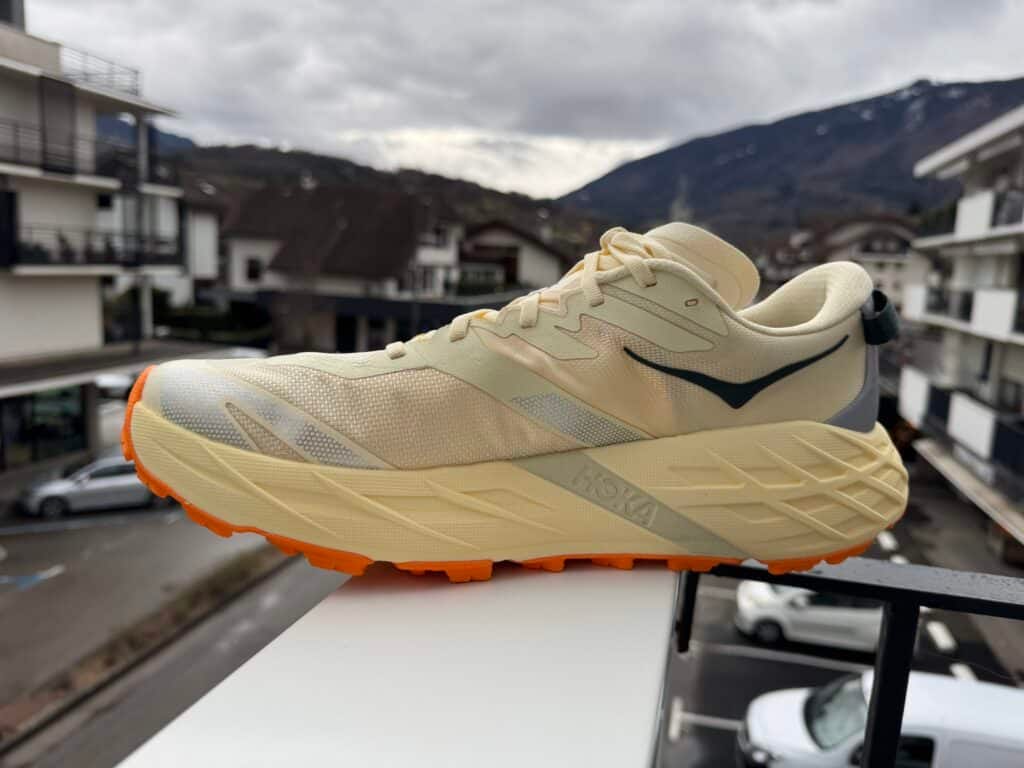
The new material feels noticeably more abrasion-resistant and tougher through the forefoot. The toe bumper at the front of the shoe is also a little more rigid, adding an extra layer of protection.
If you regularly clip rocks, brush roots or run on narrow and technical trails, the front of the shoe immediately feels more protective than the Speedgoat 6.
The toe box is also slightly wider around the ball of the foot compared to the previous version. For many runners, that is a welcome change.
However, it’s important to be honest here.
Although the toe box is a little broader, the overall volume is still quite low, especially in height. If you found that the Speedgoat 6 rubbed across the top of your toes, you are likely to notice a similar limitation in the Speedgoat 7.
So while the shape has improved slightly, this is still very much a performance-oriented fit rather than a high-volume or foot-shaped toe box.
A small change that makes a big difference – the tongue
One of the most common complaints with the Speedgoat 6 was the tongue.
It was very thin and slightly too short, and for some runners that led to irritation at the front of the ankle.
HOKA has clearly addressed this.
The Speedgoat 7 tongue is longer and has a touch more padding. That small update completely changes how the shoe feels across the front of the ankle and lace line.
For anyone who struggled with tongue bite in the previous version, this is a genuinely meaningful improvement.
The new lacing and upper structure also create more of a “wrapped” feel around the midfoot, helping lock the foot into the centre of the shoe more securely.
Check the latest prices on Amazon
Heel fit and rear-foot structure
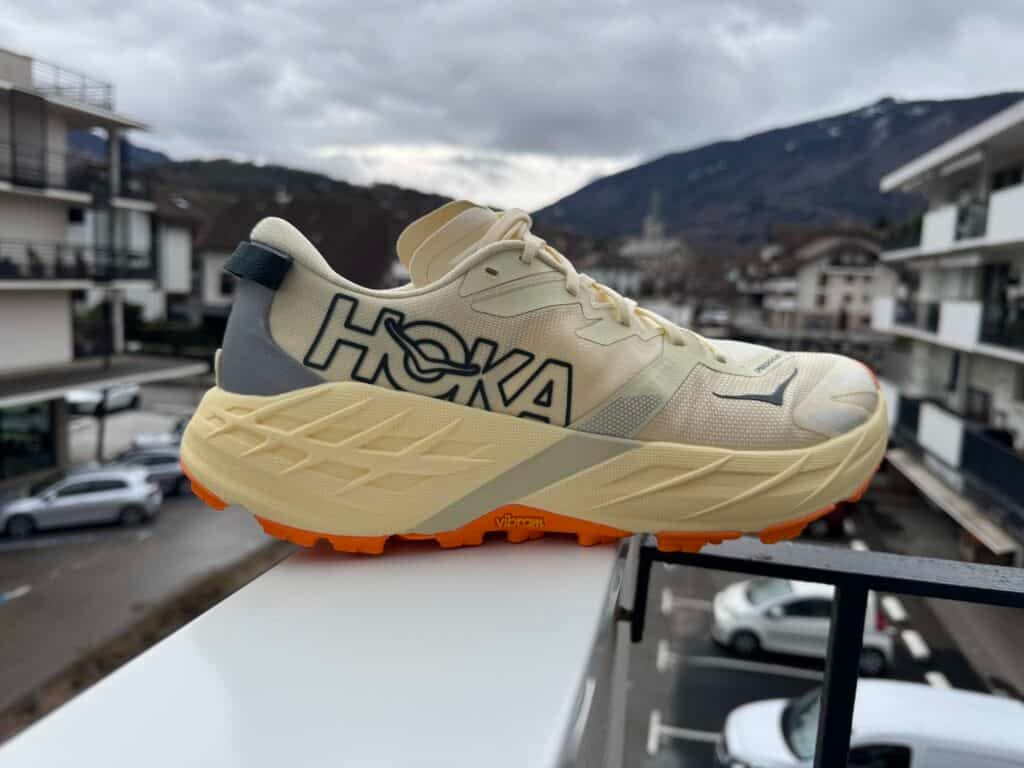
Around the heel, the Speedgoat 7 sits slightly lower than the Speedgoat 6.
For most runners, this still feels comfortable and secure, and there is a moderately rigid heel counter that helps support and stabilise the rear of the foot.
However, if you previously relied on the higher heel structure in the Speedgoat 6 because of sensitivity around the back of the heel – for example with Haglund’s-type irritation – this lower profile may feel a little less accommodating.
The most overlooked update: the split heel bevel
One of the biggest upgrades in the Speedgoat 7 is also one of the least talked about.
HOKA has reworked the split heel bevel.
The heel is now more clearly decoupled through the centre, creating a deeper and smoother curve at the back of the shoe. In practical terms, this means that when you land on the heel – particularly when descending – the transition from heel to midfoot is noticeably smoother.
If you spend a lot of time running downhill on steep or technical terrain, this change alone makes the Speedgoat 7 feel more controlled and more enjoyable to run in.
It is a subtle geometry update, but it has a very real effect on how the shoe rides.
Key numbers – stack height, drop and weight
From a specification point of view, the Speedgoat 7 looks very similar to the Speedgoat 6.
You still get:
- 37 mm in the heel
- 32 mm in the forefoot
- 5 mm drop
Where things improve is the weight.
In a men’s US size 9, the Speedgoat 7 comes in at 272 grams, compared with 283 grams in the Speedgoat 6.
That 11-gram reduction might not sound huge on paper, but it does contribute to the lighter and more responsive feel on the trail.
A completely new midsole – and this is the real story
The biggest technical change in the Speedgoat 7 is the midsole.
The previous CMEVA foam has been replaced with a super-critical EVA compound.
And this is where the Speedgoat 7 really separates itself from the Speedgoat 6.
Underfoot, the new foam feels noticeably more energetic and more responsive. The shoe finally feels alive again, rather than flat and muted.
Importantly, it still feels stable. The extra rebound does not make the platform feel soft or uncontrolled. Instead, HOKA has struck a very balanced feel – softer and more forgiving than before, but without becoming mushy.
The lighter weight and more reactive foam also help the shoe transition more smoothly from heel to forefoot.
Combined with the new heel bevel, this creates a noticeably smoother ride overall.
Check the latest prices on Amazon
How it feels later in a run
One of the problems with the Speedgoat 6 was how quickly the midsole seemed to lose its energy.
On longer runs, the ride often became dull and unresponsive.
The Speedgoat 7 holds its shape better as fatigue builds. You still get some spring and forward motion when pushing off, even after longer periods on the trail.
For runners using the Speedgoat for medium to long-distance trail runs, this is a very meaningful upgrade.
Grip and outsole changes
The Speedgoat 7 continues to use a high-traction outsole layout, with a revised lug pattern designed to improve downhill control and braking.
The lug layout has been updated to improve how the shoe engages with the ground, particularly when descending and changing direction.
The result is a shoe that feels confident and predictable on mixed terrain and technical trail.
The main downsides you should be aware of
While the Speedgoat 7 is a clear improvement overall, there are still a few limitations.
The biggest one remains the toe box.
Yes, it is slightly wider than before, but it still tapers and does not provide much vertical space. For runners who prefer natural toe splay, or who tend to swell during longer runs, this can still feel restrictive.
From a foot health point of view, more space through the forefoot would be beneficial for many runners.
Another limitation is forefoot protection.
The Speedgoat 7 has a relatively stiff forefoot, but it does not include a dedicated rock plate. On very rocky, sharp or broken terrain, a rock plate would add another layer of underfoot protection.

A quick note on how it compares to alternatives
It’s worth briefly mentioning that shoes like the Trabuco 14 from ASICS now sit much closer to the Speedgoat than in previous generations, mainly due to improvements in their midsole technology and fit.
However, the Speedgoat 7 still stands out for runners who want a faster, more energetic feel on flatter trail sections and rolling terrain, combined with excellent grip and downhill control.
If you’re looking for a trail shoe of similar weight and profile but with a firmer cushioning then check out the Peregrine 16.
Is the HOKA Speedgoat 7 worth upgrading to?
For most runners coming from the Speedgoat 6, the answer is yes.
The new midsole alone makes the shoe feel more modern and far more enjoyable to run in. The improved heel bevel delivers smoother transitions, particularly when descending, and the tongue and upper updates fix genuine comfort issues from the previous model.
However, if you are very sensitive to toe box volume, or you need more space over the top of your toes, this is still not the most accommodating trail shoe on the market.
In short:
The Speedgoat 7 finally brings back the energy and ride quality that many runners felt was missing in the Speedgoat 6 – without sacrificing the protection and stability the Speedgoat line is known for.
For runners who want a responsive, reliable and downhill-confident trail shoe, the Speedgoat 7 is one of the strongest updates HOKA has made to the series in years.