The Nike ACG Pegasus Trail might be one of the most versatile shoes Nike have made in years. This is one of those rare shoes that genuinely works across multiple environments without feeling out of place. You can take it from road to gravel to light trail without really thinking about it, and that’s what makes it so appealing for so many people.
But there’s also a big difference between a versatile shoe and a shoe that does everything perfectly.
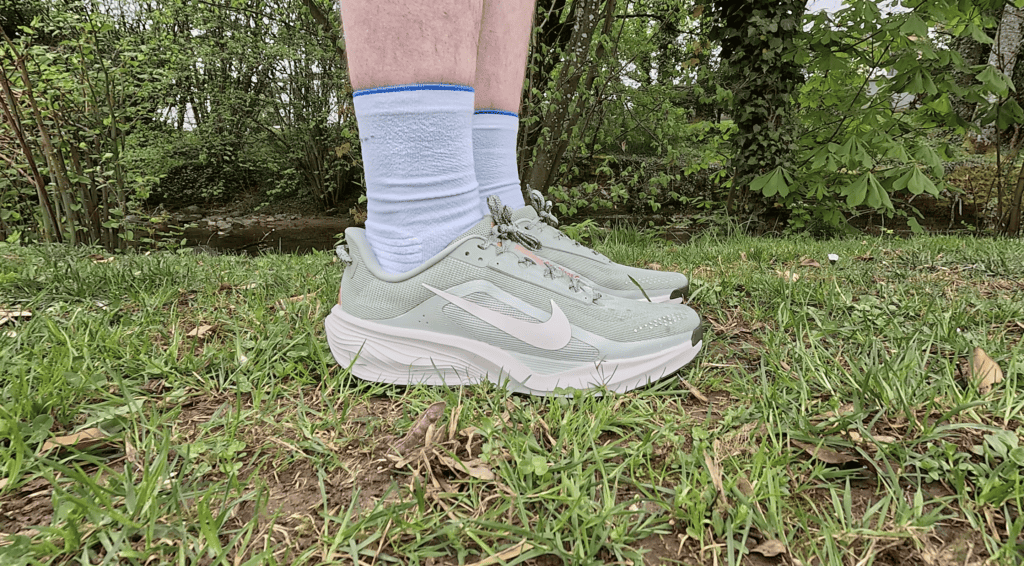
After spending time running on mixed terrain, wet gravel, compact trails, and road sections, I think the Nike ACG Pegasus Trail sits in a very specific category. It’s not an aggressive mountain trail shoe, and it’s not a soft max-cushion road shoe either. Instead, it’s one of the best “road-to-trail” shoes currently available if you want one shoe that can cover a bit of everything.
First Impressions: Feels More Like a Road Shoe Than a Trail Shoe
The first thing that stood out to me was just how smooth this shoe feels underfoot.
A lot of trail shoes feel clunky or awkward when you transition onto road surfaces. You often feel like you need to adjust your stride slightly depending on the terrain beneath you. That isn’t really the case here.
The Nike ACG Pegasus Trail feels surprisingly natural when moving between road, gravel, and forest paths. You don’t really think about what surface you’re on. The transition just feels smooth and consistent the whole way through.
That’s largely because the shoe actually rides much closer to a road shoe than a traditional trail shoe.
For a lot of people, that’s exactly what they want.
If you’re someone who:
- Runs mainly on roads but occasionally hits gravel paths
- Walks or hikes on compact trails
- Wants one shoe for travelling
- Needs one daily “do-it-all” option
…this shoe makes a huge amount of sense.
Check the latest prices of the shoes below:
Outsole and Grip: Better Than It Looks
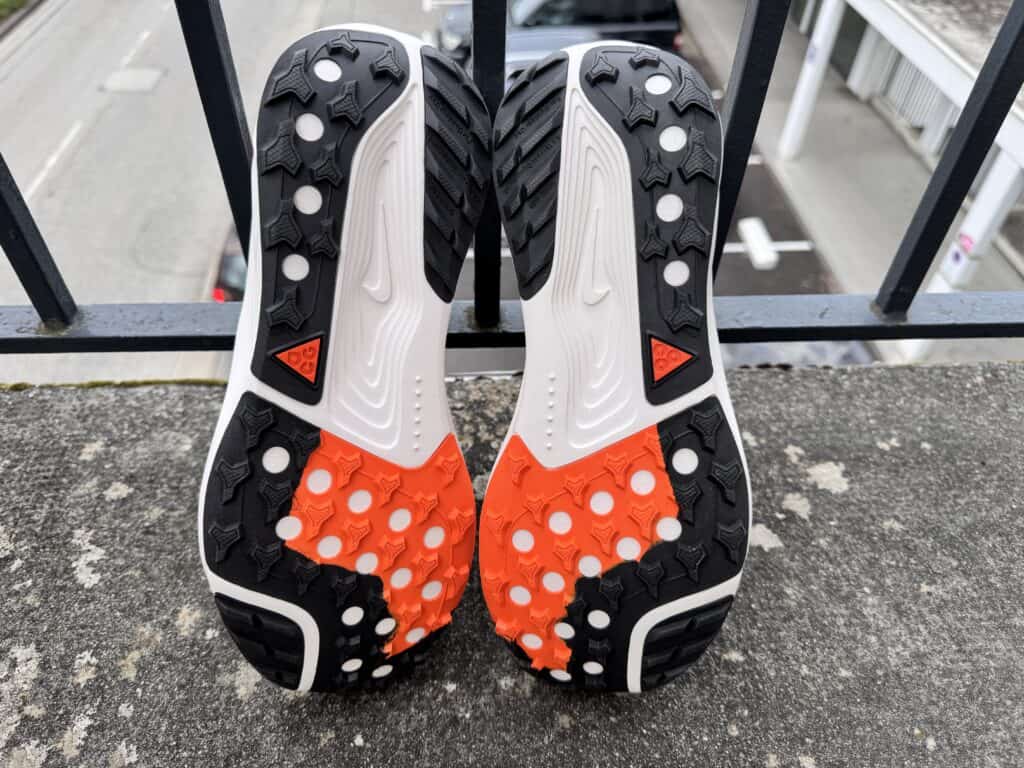
When you flip the shoe over, it honestly doesn’t look that aggressive.
The outsole uses 3.5 mm lugs with a hybrid tread pattern, alongside Nike’s ATR 2.0 rubber compound, which Nike claim improves grip and durability significantly. It is a heavy shoe coming in at 349g in my size 12 US.
On paper, that sounds fairly standard.
But out on mixed terrain, the grip performs much better than you’d expect.
It handled:
- Gravel paths
- Compact trails
- Wet rock
- Forest terrain
…without any real issues.
One thing I noticed was that I never felt like I had to slow down or speed up depending on the surface underneath me. The grip just felt predictable and smooth throughout.
The outsole layout also makes a lot of sense when you look more closely at it. The lug positioning changes across different areas of the shoe to help with traction in multiple directions.
Towards the medial side of the heel, you’ve got more of a washboard-style pattern, which helps with braking and control when descending. That’s particularly useful because most runners naturally heel strike slightly towards the inside of the heel.
It’s a subtle detail, but it works really well in practice.
ReactX Midsole Gives It a Balanced Ride
Underfoot, Nike are using a ReactX 3.0 Cushlon midsole, and this is really what gives the shoe its versatile feel.
Rather than being extremely soft or overly firm, it sits somewhere nicely in the middle.
From what we can currently gather, the shoe has roughly a 39 mm heel stack and 31 mm forefoot stack, giving it an 8 mm drop.
That combination works really well for easy miles, hiking, walking, and steady-paced running.
When you land on the heel, there’s enough cushioning to absorb impact comfortably, but the shoe still keeps a good sense of ground contact underneath your feet.
The geometry also plays a huge role here.
You’ve got:
- A nicely bevelled heel
- A mild-to-moderate forefoot rocker
- Minimal exaggerated toe spring
That means the shoe transitions very naturally from the back to the front of the shoe without feeling overly aggressive.
On road sections especially, it feels extremely smooth.
Stability: Neutral But Surprisingly Secure
Despite being a neutral shoe, the Nike ACG Pegasus Trail actually feels relatively stable underfoot.
Now, this isn’t a stability shoe.
If you need:
- Significant arch support
- Medial posting
- Strong guidance features
…this probably won’t be the right option for you.
The heel and midfoot base aren’t especially broad, but Nike have managed stability in a different way.
The shoe gets a lot of its security from:
- A rigid heel counter
- A deeper heel cup
- Strong heel lockdown
- A broad forefoot platform
That combination helps keep your foot centred inside the shoe, especially when you’re fatigued or descending downhill.
For most neutral runners and walkers, it provides enough reassurance without feeling intrusive.
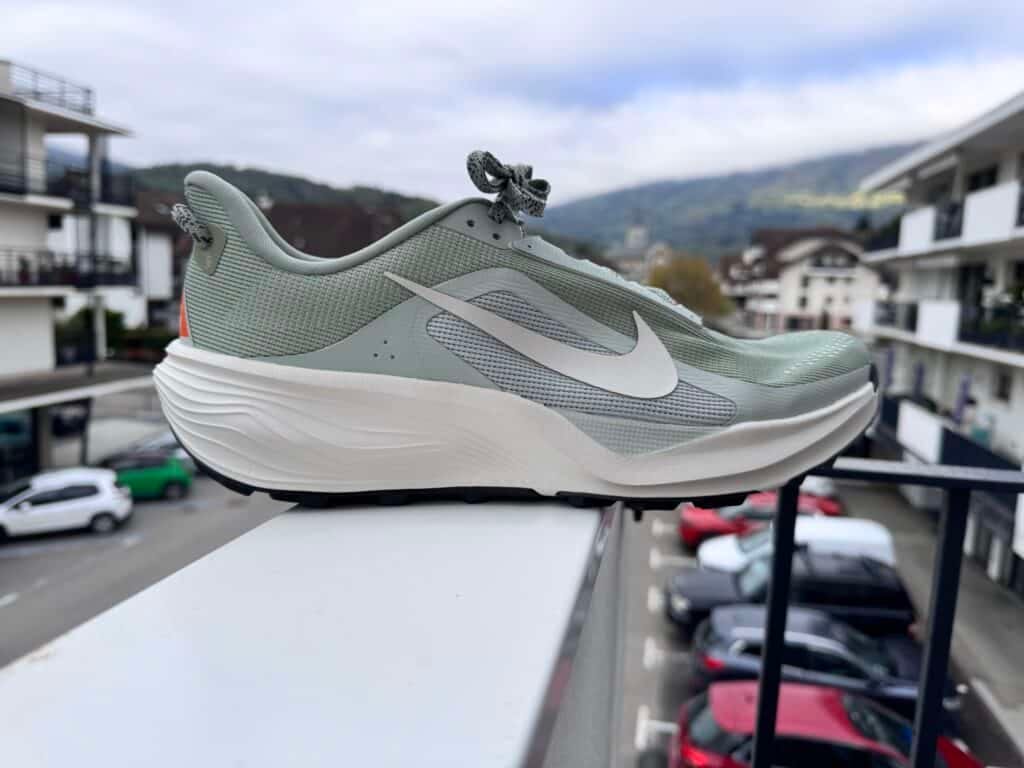
Flexible Forefoot Gives Great Ground Feel
One thing I really liked about this shoe is how flexible the forefoot feels.
A lot of modern trail shoes are becoming increasingly stiff and overly structured. The Nike ACG Pegasus Trail goes in the opposite direction.
That flexibility gives the shoe:
- Better ground feel
- A more natural ride
- Smoother transitions on mixed terrain
The downside is that you lose some underfoot protection.
There’s no rock plate in this shoe, so if you regularly run on:
- Sharp granite
- Technical rocky terrain
- Very uneven mountain trails
…you’ll probably want something more protective.
Likewise, if you have:
- Sensitive forefeet
- Metatarsalgia
- Hallux rigidus
- Big toe joint irritation
…the flexible forefoot may not work as well for you.
But for the majority of people using this shoe on roads, gravel, forest paths, and easier trails, it strikes a really good balance between comfort and terrain feel.
One of the Best Features: The Toe Box
This is probably one of the biggest improvements Nike have made.
Traditionally, trail shoes tend to feel very tapered and restrictive through the forefoot because brands prioritise lockdown and precision.
The Nike ACG Pegasus Trail still locks the foot down nicely through the heel and midfoot, but the forefoot is noticeably wider than many older Nike models.
That wider toe box allows:
- Better toe splay
- Improved comfort on longer runs
- Better ground contact feel
- More natural push-off
At the same time, the deeper heel cup keeps you feeling secure when changing direction or descending.
The only downside is that the engineered mesh upper runs slightly low in volume over the toes.
So if you have:
- Very high-volume feet
- A high rigid arch
- Toes that sit higher vertically
…you may notice pressure over the top of the forefoot.
For most people though, the fit should feel much more accommodating than older Nike trail shoes.
Check the latest prices of the shoes below:

Where the Nike ACG Pegasus Trail Struggles
As versatile as this shoe is, it definitely has limitations.
This is not a shoe built for:
- Deep mud
- Soft ground
- Technical mountain terrain
- Aggressive trail running
When I tested it after several days of rain, I found myself avoiding the deeper muddy sections because the grip simply wasn’t aggressive enough.
On wet rock and gravel, it actually performed really well.
But once the terrain became soft, loose, or heavily muddy, you started to notice the limitations of the shallower lug depth.
Likewise, because the forefoot is flexible and lacks a rock plate, it’s not ideal for sharp technical terrain where you need extra underfoot protection.
So if you want one shoe specifically for serious trail running, there are definitely better options on the market.
Final Thoughts
Where the Nike ACG Pegasus Trail really shines is as a true road-to-trail hybrid.
If you’re looking for:
- One travel shoe
- One daily walking shoe
- One easy running shoe
- One versatile hiking option
…it’s honestly one of the best shoes Nike have made in years for that purpose.
It feels smooth on the road, capable on gravel, comfortable on compact trails, and versatile enough that most people could genuinely use it as their single daily shoe.
The durability also looks promising.
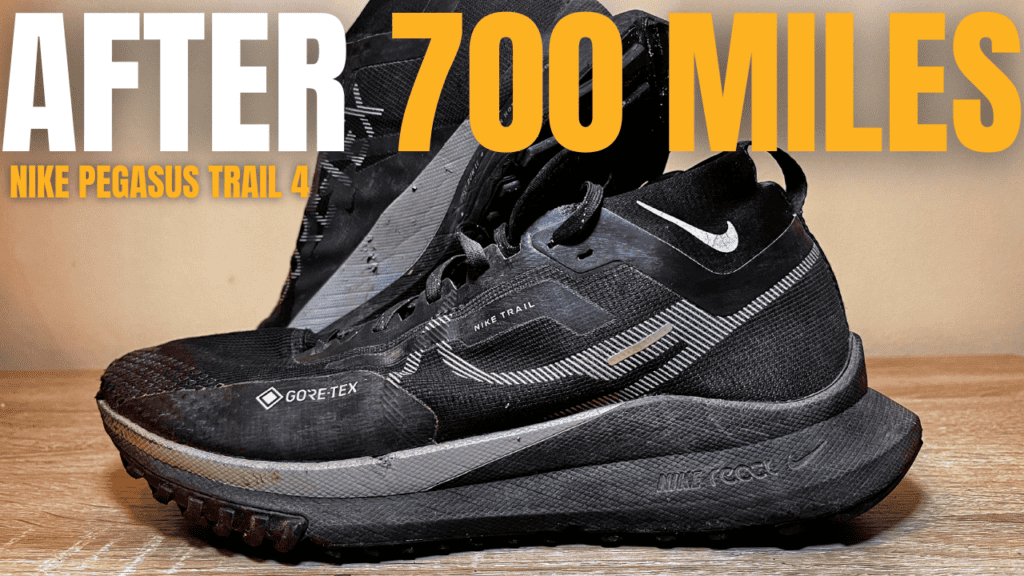
In our review of the Nike Pegasus Trail 5, we clocked over 700 miles in the shoe with very little wear overall. So if Nike have genuinely improved outsole durability again, this could end up being excellent value for money.
The only real downside for me is the weight. For my US size 12, it’s definitely on the heavier side compared to some other road-to-trail options.
But overall, for most people looking for one versatile shoe that covers road, gravel, and light trail exceptionally well, the Nike ACG Pegasus Trail is a really impressive road-to-trail option.