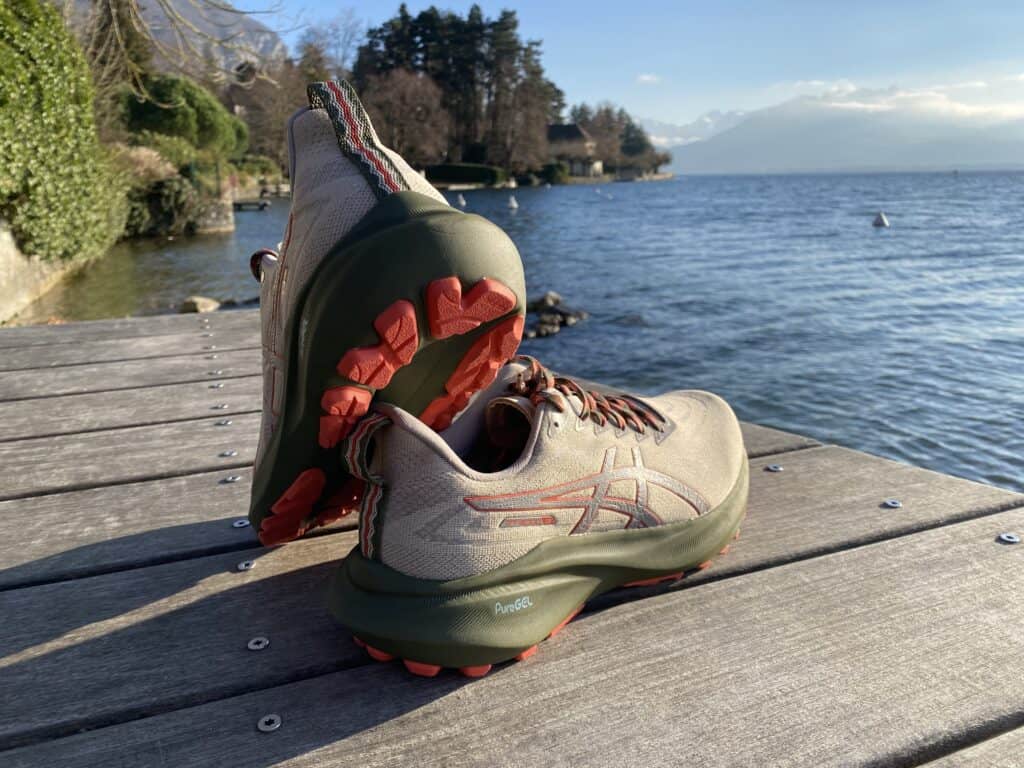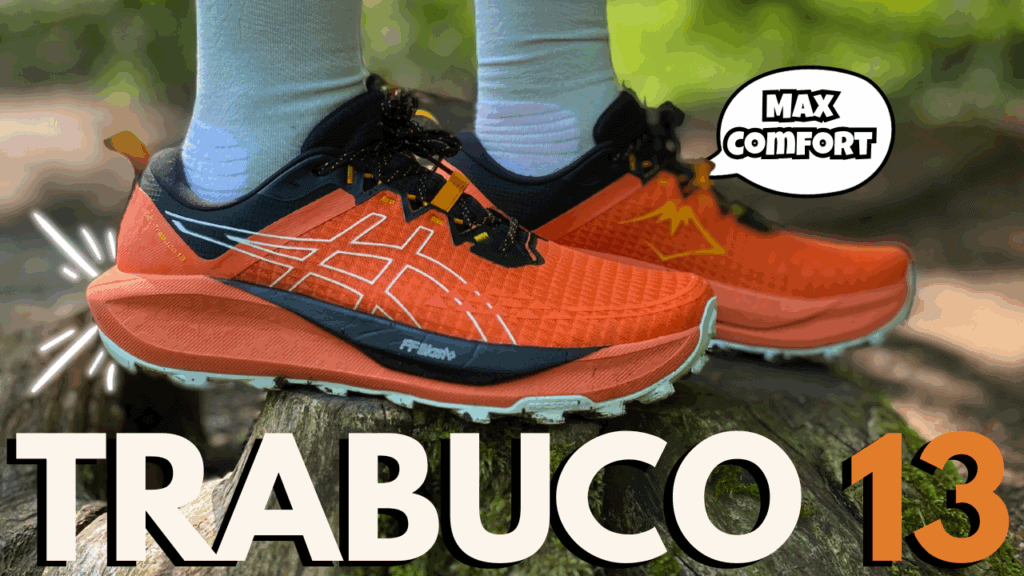
The ASICS Trabuco 14 might look similar to the Trabuco 13 on paper, but this year’s update goes far deeper than a single millimetre difference in stack height. Despite only a 1 mm increase on the spec sheet, the Trabuco 14 has been rebuilt from the midsole up, with changes that significantly alter how the shoe performs on trail.
In this detailed review, we break down the key differences in construction, fit, cushioning and trail feel between the Trabuco 14 and Trabuco 13 — and touch briefly on how it fits within the broader trail shoe landscape.
What’s Changed: Midsole, Stack and Foam
On paper, the Trabuco 14 measures:
- 35 mm heel
- 27 mm forefoot
This compares to 34 mm / 26 mm on the Trabuco 13 — the same 9 mm drop remains.
However, the real shift is under the surface. The Trabuco 13 used FF Blast Plus foam, while the Trabuco 14 now incorporates FF Blast Max — a denser, more responsive take on the foam seen in ASICS road runners like the Novablast or GT-2000. In the 14 it’s tuned to be firmer and more energetic, while still retaining protection.
Both versions retain the rock plate in the forefoot, but the overall geometry has changed dramatically, giving the Trabuco 14 a completely different ride feel.
New Stability Features
One of the biggest midsole changes is the addition of taller sidewalls on both the inside and outside of the shoe from heel to midfoot. This creates a more supportive platform that cradles the foot and helps keep it centred, especially on uneven terrain.
While the Trabuco 13 was relatively streamlined, the 14 feels firmer and more planted — almost as though the shoe is holding you in place rather than letting the foot roll freely on the platform.
Check the latest prices on Amazon below:

Lug Depth and Traction
The lug pattern has also been updated, with depth increasing from 3.3 mm to 4 mm and a new tread layout designed to improve grip beneath the foot. In real-world use, this gives noticeably better traction and braking ability, particularly on softer or loose trail surfaces.
Redesigned Fit and Shape
ASICS have reworked the fit throughout:
- ➤ Narrower midfoot for a more secure lockdown
- ➤ Wider, higher-volume forefoot for natural toe splay
- ➤ Better vertical space across the toe box
This results in a more anatomical fit overall. The narrower midfoot contributes to confident direction changes and downhill stability, while the broader forefoot reduces pressure for those with wider feet or sensitivity in the ball of the foot.
Surprisingly, despite all the changes, the 14 is slightly lighter than the 13 — 281 g vs 283 g in a US men’s size 9.
On-Trail Performance: What’s It Like?
The most dramatic change in ride is how the cushioning feels.
The Trabuco 13 was softer and more comfort-focused, absorbing impact and vibration well over long, easy trails. The Trabuco 14, by contrast:
- feels firmer underfoot
- has noticeably more bounce and responsiveness
- delivers a more controlled and planted ride
You get a springier feel off the toe, especially on compact surfaces, without the foam collapsing on impact. On uneven ground this creates a feeling of being centred in the shoe rather than riding cushioned on top of it.
Stability and Confidence
Those taller sidewalls and the wrapped midsole make a real difference when:
- descending
- cornering
- changing direction at speed
Where the Trabuco 13 could feel like you were sitting on the shoe, the 14 feels like the shoe wraps around your foot. This improves confidence on technical terrain and gives a more secure sensation underfoot.
Breathability and Upper Comfort
The Trabuco 14 uses an updated engineered mesh, which is more breathable than the 13’s upper. It also holds the foot nicely without feeling overly stiff. ASICS have indicated they intend to use this updated last for more of their models going forward.
Check the latest prices on Amazon below:

Pros & Cons: Trabuco 14 vs Trabuco 13
Pros
- More responsive, springy cushioning
- Noticeable improvement in stability
- Better grip thanks to deeper lugs
- Excellent overall fit — snug midfoot and roomy toe box
- Lighter weight despite increased stack and structure
Cons
- Less aggressive heel bevel — descent transitions feel less smooth than the 13
- Firmer cushioning may not suit runners who loved the softer feel of the Trabuco 13 for long, easy days
So Which Should You Choose?
Choose the Trabuco 14 if you want:
- more rebound and bounce
- a more structured, stable ride
- a wider, more anatomical fit in the toe box
Stick with the Trabuco 13 if you prefer:
- a softer, more forgiving feel underfoot
- smoother transitions during long, slow runs
Although they look similar on paper, these now feel like very different shoes in use.
Quick Note on Other Trail Shoes
Some trail shoes, like the Saucony Peregrine 16, remain firmer and lighter, with a more flexible feel and a focus on speed and agility while the Hoka Speedgoat 7 has a more energetic, responsive midsole. If you prefer a fast, responsive shoe for shorter, race-style runs, those models may suit you better. If you prefer maximum comfort, protection, and long-distance cruising, the ASICS Trabuco Max 5 may actually suit you better.
But for most mixed-use trail runners — from shorter runs through to long distance and hike/run days — the Trabuco 14 hits that sweet spot of stability, comfort and versatility.
Final Thoughts
The ASICS Trabuco 14 is one of the most significant updates in the Trabuco line for years. It shifts the shoe away from pure comfort and toward a more structured, responsive and capable trail performer.
Whether you’re coming from the Trabuco 13 or choosing your next daily trail shoe, this update is worth serious consideration — especially if you value stability and anatomical fit.