
When choosing between the HOKA Speedgoat 6 and the Saucony Peregrine 16, trail runners often find themselves comparing two of the most popular and high-performing models available today. Both shoes offer strong updates, improved durability, and excellent traction, but they deliver completely different experiences on the trail.
After testing both shoes on mixed terrain, I’ve identified six major differences that will help you decide which model best suits your running style, foot shape, and performance goals.
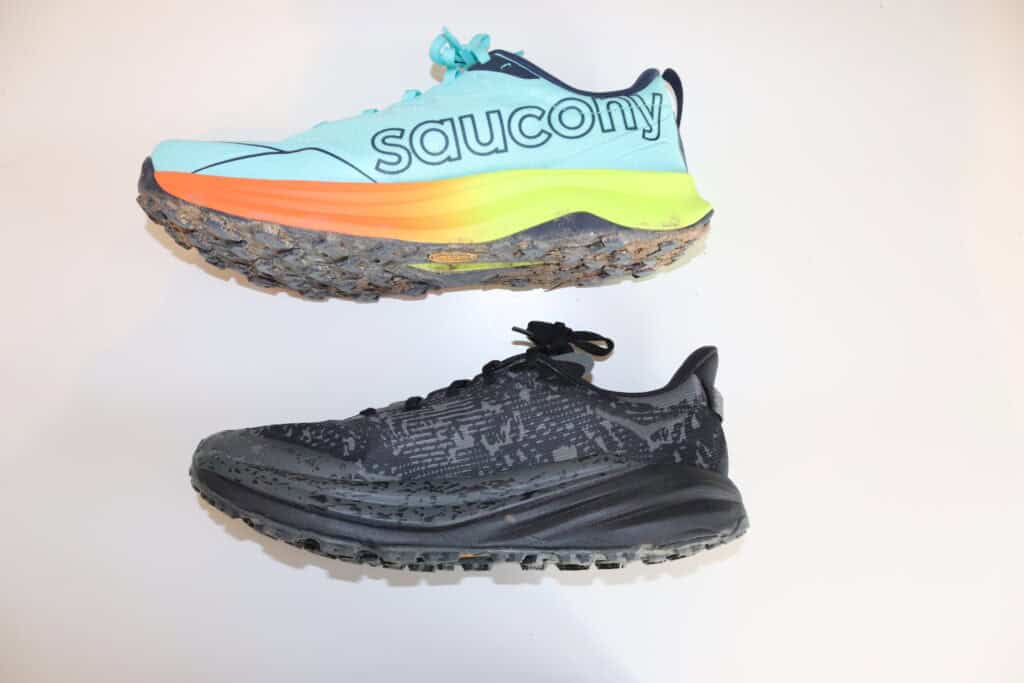
1. Cushioning and Stack Height
The biggest difference between the two shoes lies in the midsole.
- HOKA Speedgoat 6:
- 40 mm heel / 35 mm forefoot
- Extremely firm CMEVA cushioning
- Excellent ground contact and stability on technical terrain
- Saucony Peregrine 16:
- 33 mm heel / 29 mm forefoot
- Softer, more cushioned feel with increased foam compared to the Peregrine 15
- Bouncier and more compliant for long-distance comfort
If you prefer a sturdier, more responsive ride, choose the Speedgoat 6. If comfort and cushioning are your priority, the Peregrine 16 delivers.
2. Heel-to-Toe Drop
- Speedgoat 6: 5 mm
- Peregrine 16: 4 mm
Both drops feel natural on the trail, but the lower drop in the Peregrine gives slightly more ground feel, whereas the Speedgoat pushes you a touch more into your forefoot on climbs.
3. Outsole Grip and Traction
A big upgrade for the Peregrine this year:
- Peregrine 16: Now uses Vibram Megagrip with 4 mm lugs
- Broad, stable lugs
- Excellent grip on wet rock and variable surfaces
- Speedgoat 6: Vibram Megagrip with 5 mm diagonal, multi-directional lugs
- Unmatched traction in technical terrain
- Performs better in mud, steep ground, and loose gravel
If your trails are technical or muddy, the Speedgoat 6 grips better. For general mixed terrain, the Peregrine 16 is more versatile.
Check out the prices on Amazon
4. Upper Construction and Durability
Both shoes received upper redesigns:
- Peregrine 16:
- Fully revamped upper
- Reinforced abrasion-resistant overlays
- Better durability than previous models
- Padded tongue for comfort
- Speedgoat 6:
- New engineered mesh
- Thinner, less padded tongue
- Less toe protection, softer material around the front
If toe protection and durability matter, the Peregrine 16 gets the edge.
5. Fit: Narrow vs Wide
This is one of the most important differences:
- Peregrine 16:
- Roomy toe box
- Allows natural toe splay
- More accommodating for wide feet
- Speedgoat 6:
- Very narrow and tapered toe box
- Snug, performance-focused fit
- Best for narrow or low-volume feet
If you have a wide forefoot, the Speedgoat may feel restrictive. If you need space in the toe box, choose the Peregrine.

6. Performance on the Trail
Both shoes can handle long-distance running and hiking, but they specialise differently:
- Speedgoat 6:
- More stable, firmer, and nimble
- Narrow shape helps with precise foot placement
- Best for technical mountain terrain
- Peregrine 16:
- Softer, more cushioned, more comfortable
- Better for moderate trails and long hours on your feet
- Excellent all-round daily trail shoe
Final Verdict
The HOKA Speedgoat 6 and Saucony Peregrine 16 serve different types of runners:
Choose the Speedgoat 6 if you want:
• Maximum grip
• Firm stability
• A nimble, narrow fit
• Performance on technical ground
Choose the Peregrine 16 if you want:
• More cushioning
• A wider toe box
• All-day comfort
• A durable protective upper
Both models are excellent, but choosing the right one will depend on your foot shape, terrain, and comfort preferences.